
It is the middle of the Saturday afternoon rush. Your shop floor is packed, the queue is stretching out the door, and the energy is high. Your staff are working brilliantly to serve everyone.
Then, a customer steps up to pay. They tap their card on the machine, expecting that satisfying beep. Instead, the screen flashes a blunt, red message: Declined.
Suddenly, the momentum stops. The customer looks embarrassed, frantically checking their banking app. The people waiting behind them in the queue start shifting their weight and checking their phones. Your staff member feels awkward, unsure of how to break the news without causing a scene.
For UK SMEs, this is a daily reality. However, handling a declined card is not just an operational glitch; it is a critical moment for customer service.
When you get this conversation wrong, you risk alienating a loyal patron, causing unnecessary friction, and slowing down your entire operation. It kills your speed of service and creates a tense atmosphere.
When you get it right, you turn an awkward moment into an example of exceptional service. At Teya, we believe in Heartwarming Hospitality. We want to help our Members navigate these tricky moments smoothly.
Here is exactly how to manage a declined payment, keep your queue moving, and protect your business.
Understanding the Common Causes
Before you can solve the problem, you need to understand why it happens. A declined message is rarely a personal failure on the customer's part. In the vast majority of cases, it is an automated security measure designed to protect everyone involved.
Every time a card is tapped or inserted, a complex chain of communication happens between your card machine, the payment network, and the customer’s bank. If any link in that chain flags a risk, the payment stops.
Finding the exact card declined reason quickly helps you guide the customer toward a solution.
Strong Customer Authentication (SCA)
Since the Financial Conduct Authority (FCA) rolled out new rules, security checks have become much stricter. Under the UK's Strong Customer Authentication regulations, banks must occasionally ask customers to verify their identity.
If a customer makes multiple consecutive contactless payments, their bank will eventually block the next tap. The fix is incredibly simple: ask them to insert the card and enter their PIN. You can read more about these rules directly on the FCA's official SCA guidelines.
Insufficient Funds
This is the most well-known reason. The customer simply does not have enough money in their current account, or they have hit their agreed overdraft limit. In the current economic climate, with rising living costs, this happens more frequently. It is vital to handle this with the utmost discretion.
Daily Limits and Contactless Caps
The current contactless limit in the UK is £100. If your customer tries to tap for a £120 round of drinks, the machine will automatically reject it. Even for chip and PIN transactions, some banks impose daily spending limits to prevent fraud.
Physical Card Damage
Sometimes, the issue is not the bank at all. It is the piece of plastic. If the gold chip on the card is scratched, dirty, or worn down, the machine cannot read the encrypted data.
If you suspect the terminal physically cannot read the card, it is helpful to understand how this technology works. We have a detailed breakdown of chip errors explained within our broader guide on EMV card security standards, which shows exactly how the chip communicates with the terminal.
The Three-Step De-Escalation Protocol
When the machine says no, your staff need a reliable script. We advise our Members to train their teams on this simple, three-step protocol to keep the interaction positive.
1. The Discreet Inform
Never shout "Declined!" across the counter. Keep your voice low. Frame the issue as a technical delay rather than a personal financial failure.
Say this: "It looks like the terminal hasn't connected with your bank just yet." Do not say: "You don't have enough money" or "Your card is blocked."
By blaming the "connection" or the "terminal," you save the customer from public embarrassment.
2. The Simple Reset
Give the customer a clear, immediate action to take. Often, changing the method of payment fixes the issue instantly.
Say this: "Shall we try inserting the card and using your PIN this time? Sometimes the contactless limit gets reached."
This gives the customer a logical reason for the failure (a security feature) and allows them to try again without feeling judged.
3. The Graceful Pivot
If the second attempt also fails, you must move the transaction forward without holding up the queue.
Say this: "It seems your bank is being extra secure today. Do you have another card you'd like to try, or perhaps Apple Pay on your phone?"
If they are completely stuck, have your backup payment methods ready. You might offer to hold their items behind the counter while they step outside to call their bank or transfer funds.
Protecting Your Business from Fraud
While most declined cards are honest mistakes, you must stay vigilant. Criminals often use declined cards as a tactic to confuse staff or force transactions through illegally.
According to UK Finance, the industry stopped over £1 billion in unauthorised fraud in recent years, but criminals continually adapt their methods. You can see the full breakdown of these statistics on the UK Finance website.
Spotting Distraction Tactics
Fraudsters often work in pairs. While one argues with you about a declined card, the other attempts to steal goods or manipulate the terminal. Always maintain focus on the machine.
The "Manual Entry" Scam
If a card is declined, a fraudster might ask you to manually type the long card number into the keypad. Never do this unless you are running a specific mail-order business. Keyed-in transactions bypass essential security checks. If that card is stolen, you will face a chargeback and lose the money.
Training your team on identifying suspicious cards is a vital part of running a secure shop floor. Trust your instincts. If a customer becomes overly aggressive when a card fails, it is often a major red flag.
How the Right Technology Fixes the Problem
A declined card is stressful enough. You do not need a slow, freezing card machine making the situation worse.
Many older POS providers and traditional high street banks issue hardware that is sluggish and prone to dropping its Wi-Fi connection. When the connection drops, you cannot tell if the card was declined by the bank or if the machine simply gave up.
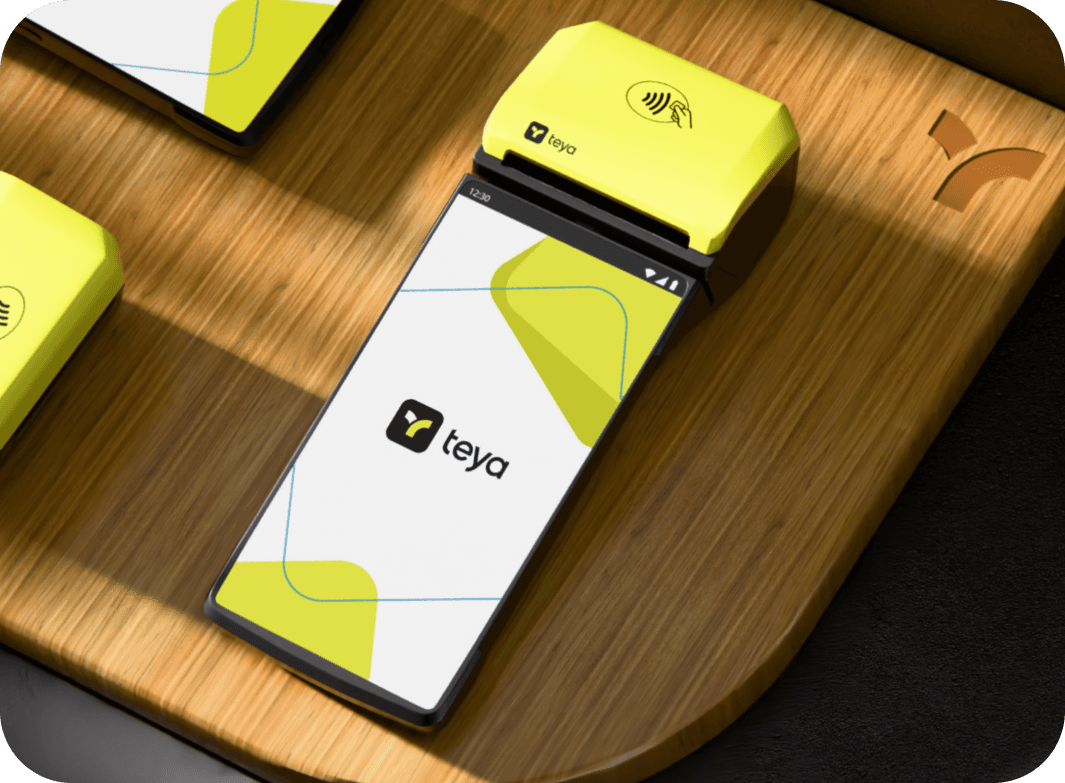
This is where Teya steps in. We built our products to eliminate these daily frustrations.
Reliable Connectivity
Our card machines come with intelligent dual connectivity. They connect to your shop's Wi-Fi, but if that internet connection drops, the machine automatically switches to a built-in 4G roaming SIM. It finds the strongest mobile network instantly. You will never be left staring at a "Processing..." screen while your queue grows restless.
Clear Error Messages
When a transaction fails, a Teya machine gives you a clear reason on the screen. Instead of a vague error code, you will know if it is a PIN issue, a contactless limit, or a bank decline. This allows you to guide the customer accurately.
Why Teya is the Ultimate Financial Ally
Handling payments should not feel like a battle with your provider. We created Teya to be the trusted partner for local UK businesses, from bustling pubs to independent retail boutiques.
When you choose Teya, you are not just getting a piece of hardware. You are getting a system designed to help your business grow.
Next-Day Payouts as Standard Cash flow is the lifeblood of any SME. Traditional banks often hold your weekend takings until Wednesday. We think that is unfair. With Teya, you get your money the very next business day, every time. You earned it; you should have it.
Fair, Transparent Pricing Hidden fees kill margins. We offer simple, transparent pricing tailored to your business volume. You will never open your monthly statement and find a nasty surprise. We only succeed when you succeed.
Real Human Support When things go wrong on a busy Friday night, you cannot afford to sit on hold with a call centre overseas. Our support team is fast, helpful, and genuinely invested in your success.
Do not let outdated technology slow down your service or create awkward moments with your customers. It is time to upgrade to a system that works as hard as you do.
Ready to transform your checkout experience? Get started with Teya today and see the difference.
Ready to get started with Teya today?
Team Teya
•