

How to chose a Credit Card Machine
Running a small business means you wear many hats. You’re the CEO, the head of marketing, the finance department, and the chief cup-of-tea maker. With so much to do, choosing the right tools to make your life easier is essential. One of the most important decisions you'll make is how you accept payments. In a world where fewer people carry cash, a reliable card machine is no longer a luxury; it’s a necessity for growth.
But with so many options out there, how do you choose the right card machine for your small business? The choice can feel overwhelming. You need a solution that’s not just affordable but also fits perfectly with how you operate.
We understand that you need clear, honest information to make the best choice. That’s why we’ve put together this guide. We'll walk you through the different types of card machines, the costs involved, and the key features to look for. Our goal is to help you find a payment solution that saves you time, delights your customers, and supports your business as it thrives.
Which type of card machine is suitable for my business?
The "best" card machine is the one that's best for you. Your business is unique, and your payment system should reflect that. The perfect fit depends on where you work, how you interact with customers, and what your daily operations look like. Let's explore some common business types and the payment solutions that suit them best.
For the café, pub, or restaurant owner: Your environment is dynamic. You might take payments at a fixed counter, but you also need the flexibility to bring the bill to the table. A portable card machine that connects via Wi-Fi or Bluetooth is ideal. It allows your staff to take payments anywhere on the premises, speeding up service and improving the customer experience, especially during busy periods. For an even slicker setup, an integrated payment system that connects your card machine directly to your till or POS system can streamline your end-of-day reconciliation and reduce errors.
For the market trader or mobile service provider: If your business is always on the move, you need a payment solution that can keep up. A mobile card reader is your best friend. These compact devices connect to your smartphone or tablet and use mobile data (4G or 5G) to process payments anywhere. An even simpler option is Tap to Pay on iPhone. This technology turns your iPhone into a card machine, letting you accept contactless payments with no extra hardware. It's the ultimate in mobile payment solutions for businesses that travel light.
For the retail shop or salon owner: If you have a dedicated checkout area, a countertop card machine is a fantastic, reliable choice. These devices are sturdy, fast, and connect directly to your internet via an Ethernet cable or Wi-Fi, ensuring a stable connection. They are built to handle a high volume of transactions quickly and efficiently, keeping queues moving and customers happy.
For the business owner who does a bit of everything: Many small businesses don't fit neatly into one box. You might have a restaurant but also cater at local events on weekends. In this case, you need a flexible system, like Pay By Link. This ensures you never miss a sale, no matter where you are.
The value of contactless payments
Not long ago, contactless payment was a convenient novelty. Today, it’s a customer expectation. The simple tap of a card, smartphone, or smartwatch has become the standard way to pay for everyday items. For a small business, offering contactless payment options isn't just about keeping up with technology; it’s about providing a better, faster, and more secure experience for your customers.
The primary advantage is speed. A contactless transaction takes just a couple of seconds, compared to the 10-15 seconds it can take to process a Chip and PIN payment.
Did you know?
Teya's tap to pay transactions are the fastest in the market, at 1.1 seconds!
This might not sound like much, but during your lunchtime rush or a busy Saturday, those seconds add up. Faster transactions mean shorter queues, happier customers, and potentially more sales in a day.
Convenience is another huge factor. Customers no longer need to worry about having the right amount of cash or remembering their PIN. With the rise of mobile wallets like Apple Pay and Google Pay, many people don't even need their physical card. They can pay securely using the device that’s already in their hand. By offering these contactless payment options, you're removing friction from the buying process and making it as easy as possible for people to give you their business.

The benefits of card machines for small businesses
Deciding to accept card payments is one of the most impactful steps you can take to grow your business. It opens up a world of opportunities and provides tangible benefits that go far beyond simple convenience. Let's break down how a card machine can make a real difference to your bottom line and daily operations.
Increased sales
Accepting card payments can significantly increase sales. Customers are more likely to spend more when not limited by cash (source: Euronews), making impulse buys and premium product upgrades easier. Studies show card payments lead to a higher average transaction value (study from March 2019), directly boosting revenue by simplifying purchases.
More customers
In today's cashless society, businesses not accepting card payments face a significant barrier, as many customers no longer carry cash and will opt for competitors offering this convenience. Installing a card machine makes your business accessible to a wider audience, prevents lost sales, and projects a modern, professional image that prioritises customer convenience.
Device cost
When considering small business payment processing, the cost of card machine hardware varies significantly. New software solutions, such as Tap to Pay on Android or iPhone, are revolutionising this by significantly reducing setup costs. Regardless of the chosen method, always clarify what the device price includes, such as setup, support, and software, to ensure true value and avoid hidden expenses.
Less and more transparent fees
Beyond the cost of the device, the most significant ongoing expense will be the transaction fees. But, don't worry: we have all the details in our Pricing page.
Transaction fees are typically charged as a small percentage of each sale you process. For example, our Free Tier charges 1.69% per transaction. This means on a £10 sale, you would pay a fee of just under 17p. If you prefer even lower rates, check our Boost or Thrive options.
It's also important to be aware of other potential fees*:
Monthly fees: Some providers charge a set monthly fee for account maintenance, device rental, or access to their software.
Setup fees: A one-off charge to get your account and device up and running. (We don't have that at Teya)
Chargeback fees: A fee charged if a customer disputes a transaction and you lose the case.
We believe in simplicity and honesty. Hidden fees and complex pricing structures go against our values. When you're researching payment solutions for small businesses, look for a provider that offers a clear, straightforward fee structure, like Teya. You should be able to easily understand exactly what you'll be paying for each transaction, with no nasty surprises on your monthly statement.
Countertop vs portable vs mobile card readers
Understanding the physical differences between card machine types will help you pinpoint the perfect hardware for your business's workflow. Each category is designed for a specific environment, and choosing the right one can make a huge difference to your daily efficiency.
Countertop card machines are the traditional workhorses of the retail and service industries. As the name suggests, they are designed to sit on your counter, usually next to your till. They are typically plugged into a power source and connect to the internet via an Ethernet cable or Wi-Fi.
Best for: Shops, salons, cafés, or any business with a fixed payment point.
Pros: Highly reliable and fast connection, robust and durable design, often comes with a built-in printer for receipts.
Cons: Not portable, requires a dedicated space on your counter.
Portable card machines give you the freedom to take payments away from the counter, but still within your premises. They look similar to countertop models but are wireless, connecting to their base station or your Wi-Fi network via Bluetooth.
Best for: Restaurants, pubs, and cafés where you want to offer tableside payments.
Pros: Greatly improves customer experience, speeds up table turnover, reduces the need for customers to queue at the till.
Cons: Limited range (usually within 50-100 metres of the base or Wi-Fi router), needs regular charging.
Mobile card readers are the ultimate solution for businesses on the go. These are small, lightweight devices that pair with a smartphone or tablet via Bluetooth. They use your phone's mobile data (4G/5G) or a Wi-Fi connection to process payments.
Best for: Market traders, mobile hairdressers, plumbers, food trucks, pop-up shops, and delivery services.
Pros: Extremely portable and lightweight, accept payments anywhere with a mobile signal, generally lower upfront cost.
Cons: Relies on your phone's battery and data connection, receipts are usually sent via email or SMS rather than printed.
The lines between these categories are blurring with new technology. For example, solutions like Teya's Tap to Pay on iPhone turn your phone into a mobile reader without any extra hardware, offering the peak of convenience for mobile businesses.
Card payment machines – the options
We wrote in detail about the options you have in our other article, but we will summarize it here as well.
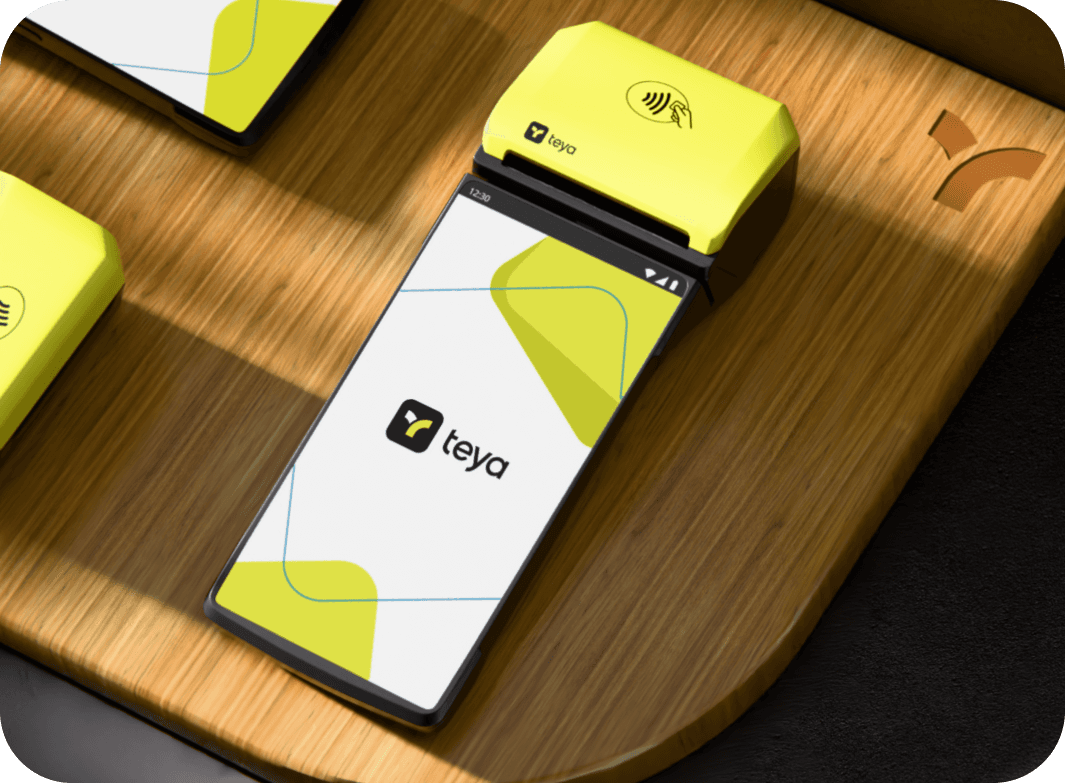
Let's look at how Teya's payment solutions can support your small business. We've designed our range of card payment machines to be simple, powerful, and adaptable, ensuring there's a perfect option for you.
Our goal is to provide you with the tools you need to accept card payments easily and affordably. We offer a variety of hardware and software solutions, all backed by our commitment to honest pricing and exceptional support for our members.
Tap to Pay on iPhone or Android: This is our most flexible and modern solution. Using just your iPhone and the Teya App, you can accept all types of contactless payments, including cards and digital wallets like Apple Pay and Google Pay. It’s perfect for new businesses wanting to start accepting payments immediately, or for established businesses that need a mobile option for events or services outside their main location. There's no need for extra hardware, making it one of the most affordable and convenient ways to get started.
Teya Go: For businesses that need a dedicated mobile card reader, the Teya Pocket is a compact and powerful choice. It fits comfortably in your hand and connects seamlessly to your smartphone or tablet. It’s built to be durable and reliable, perfect for taking payments on the shop floor, at a market stall, or in a client's home.
Teya Pro: If your business has a fixed checkout, the Teya Pro is our robust and efficient countertop card machine. It’s designed for speed and reliability, ensuring you can process a high volume of transactions without a hitch. It can connect via Wi-Fi and has a printer, giving you a stable connection you can count on during your busiest hours.
Integrated Payment Systems: For businesses looking to create the most comprehensive operation, we offer integrated payment systems. This solution connects your Teya card machine directly with your electronic point-of-sale (EPOS) system. When you ring up a sale on your till, the amount is automatically sent to the card machine, eliminating cashier errors and speeding up every transaction. It also makes your end-of-day reporting and bookkeeping much simpler, saving you valuable administrative time.
Whatever your needs, we have a solution. We're proud to offer some of the best card machines for 2025 and beyond, combining cutting-edge technology with the best customer support you could ever think of.

Conclusion
Choosing the right card machine is a vital step in setting your small business up for success. It’s not just about processing transactions; it’s about improving your customer experience, increasing your sales potential, and making your daily operations smoother and more efficient. By taking the time to understand your own needs and the options available, you can find a solution that truly works for you.
We know it can seem like a lot to take in, but it boils down to a few key steps. To find the perfect payment solution for your business, we recommend you:
Assess your business needs. Think carefully about where and how you take payments. Do you need a fixed terminal at a counter, the flexibility to take payments at a table, or a fully mobile solution for working on the go?
Understand the costs involved. Look beyond the initial price of the device. Make sure you have a clear picture of the transaction fees, monthly charges, and any other potential costs. Choose a provider that values transparency and offers a simple, honest pricing structure.
Choose the right hardware and features. Select a device that fits your environment, whether it's a sturdy countertop machine, a portable reader, or a software solution like Tap to Pay on iPhone. Make sure it supports all the payment types your customers use, especially contactless.
We're here to help you navigate this decision. At Teya, we’re dedicated to supporting the small businesses that are the heartbeat of our communities. We offer a range of simple, powerful, and affordable payment solutions designed to help your business flourish.
* Check out authorisation and PCI fees which are also commonplace in the UK for acquirers (not Teya)
Team Teya
•
2025. dec. 3.